
A client appreciation plan usually starts the same way. An advisor wants to thank good clients, someone suggests wine, branded swag, or holiday baskets, and then compliance steps in with questions about value, consistency, recordkeeping, and whether the gift could look like an inducement. That tension is real, especially in firms where relationship managers move fast and documentation moves slowly.
Strategic gifting works when it's built like any other client service process. The global corporate gifting market is projected to reach USD 925 billion in 2025 and is expected to grow to USD 1.95 trillion by 2034, with North America accounting for about 38% of global corporate gift orders and more than 68% of companies increasing gifting budgets in 2024 to improve retention and stand out in competitive markets, according to corporate gifting market projections from Everki. For financial advisors and banking teams, that growth makes the compliance question more important, not less.
The strongest client appreciation gift ideas start with structure. Firms should tier clients by relationship value, longevity, service model, or referral importance. Then they should assign a budget by tier, set approved delivery methods, centralize purchasing, and log every gift in one place.
That's what turns gifting from a seasonal impulse into a repeatable retention strategy that can survive a compliance review. The ideas below move quickly into practical options that feel valuable, stay useful, and are easier to defend internally.
Table of Contents
- 1. Customized Financial Planning Tools or Calculators
- 2. Premium Branded Experience or Event Invitation
- 3. Personalized Annual Financial Review or Planning Session
- 4. Curated Educational Content Library or Newsletter Subscription
- 5. Professional Development or Continuing Education Sponsorship
- 6. Exclusive Access to Firm Leadership or Expert Consultations
- 7. Branded Corporate Gifts with Practical Utility
- 8. Complimentary Digital Marketing or Personal Branding Consultation
- 9. Annual Charitable Giving Opportunity or Matching Program
- 10. VIP Service Tier Upgrade or Enhanced Concierge Access
- 10-Item Client Appreciation Comparison
- Execution and Compliance: Your Final Checklist
1. Customized Financial Planning Tools or Calculators
A branded planning tool is one of the safest gifts an advisory firm can offer because it delivers ongoing utility instead of a one-time gesture. Retirement income calculators, tax planning worksheets, cash flow templates, and portfolio allocation planners all reinforce the firm's expertise while giving clients something they'll revisit.
This category works especially well for firms that already segment clients by planning complexity. A pre-retiree might receive a branded income distribution tool, while a business owner could get a tax-estimate worksheet and succession planning prompt list. The gift feels personal without crossing into extravagance.
What makes this gift work
The strongest version isn't just a PDF with a logo slapped on top. It's a tool paired with explanation. A short tutorial video, a quick onboarding email, or a client webinar increases the odds that the gift gets used instead of ignored.
For firms that already map their planning process, it also helps to align the tool with a clear stage of the relationship. A calculator tied to accumulation, retirement income, or estate review feels more relevant when it supports a known planning milestone, such as the stages outlined in this financial planning framework.
Practical rule: If the tool requires too much explanation, it's not a gift yet. It's homework.
A few examples that fit this category include a retirement income calculator delivered before a planning review, a branded investment allocation worksheet sent after onboarding, or a tax checklist distributed before year-end meetings. What doesn't work is overly technical software with a steep learning curve. Clients don't want another portal to figure out. They want clarity.
2. Premium Branded Experience or Event Invitation
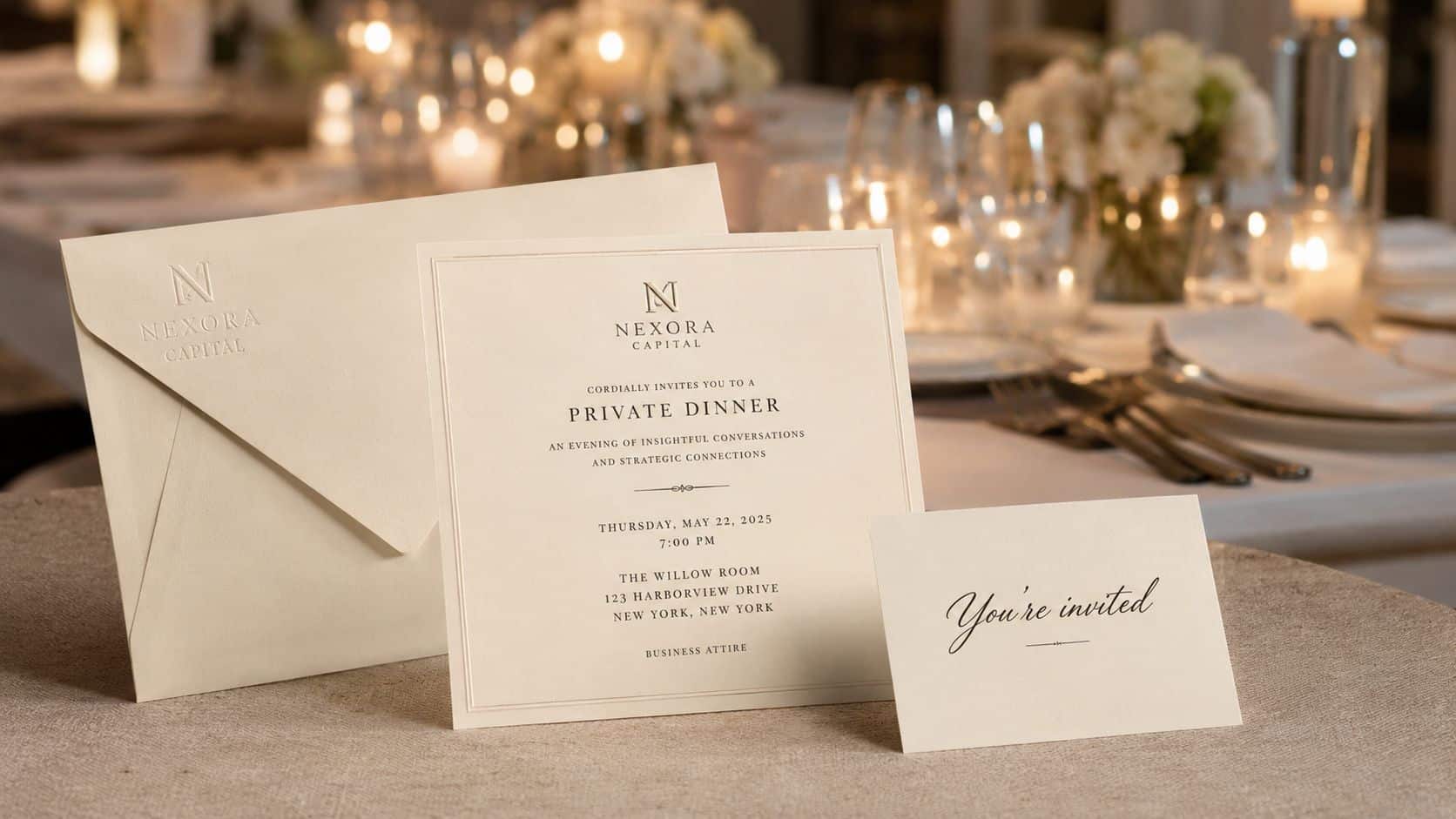
Some gifts don't need to be shipped. An invitation to a well-run event can carry more weight than a boxed item, especially when the experience reflects the firm's service style. Market outlook dinners, client brunches, economic briefings, or private virtual sessions can feel premium without looking promotional.
Client preferences also support experience-led gifting. Wine or spirits account for 17% of corporate gift preferences, coffee for 11%, and gift cards for 10%, while experiential activities like game tickets or charitable donations each hold a 10% share. Broader market preferences also show technology and electronics leading at 22 to 25%, according to corporate gifting preference data from Postal. For regulated firms, that matters because a popular gift isn't automatically a compliant one.
Keep the event educational and controlled
The best event invitations combine appreciation with substance. A dinner attached to a short planning discussion, a tax-law update breakfast, or a client family workshop on financial organization gives compliance something concrete to review. It also gives the advisor a better reason for the spend than “relationship building” alone.
A few standards make these events easier to defend:
- Set a documented purpose: Tie the invitation to client education, market commentary, or a planning milestone.
- Control the guest list: Use tiering criteria and apply them consistently.
- Avoid risky categories: Alcohol-centered events can create scrutiny even if clients would enjoy them.
An elegant invitation and strong host experience go a long way. A chaotic event with no agenda usually backfires. Clients remember whether the event felt thoughtful, not whether the centerpiece was expensive.
3. Personalized Annual Financial Review or Planning Session
For many firms, the most effective gift isn't physical at all. It's time. A deeper annual review reserved for key households can feel more valuable than a box on a doorstep because it gives clients direct attention, personalized analysis, and visible preparation.
This is especially effective for relationships that have become too routine. If quarterly check-ins have drifted into autopilot, a dedicated planning session can reset the relationship. Clients leave with updated priorities, cleaner documentation, and a stronger sense that the advisor is paying attention.

This works because it improves the client file too
A well-structured review benefits both sides. The client receives deeper planning support, and the firm gets refreshed data, updated goals, and cleaner meeting notes. That's one reason this option often survives internal scrutiny more easily than luxury goods.
There's also a retention angle. Reachdesk recommends measuring gifting ROI by comparing the retention of gift recipients against non-recipients and suggests budgets of $30 to $75 for general appreciation and $100 to $150 for major milestones or valuable relationships. The same guidance notes that one high-quality item with custom packaging and a handwritten note tends to perform better than a pile of lower-value items, as outlined in Reachdesk's gifting measurement guidance. In practice, a personalized review can function like that high-value gesture, except the value comes from relevance and advisor attention.
A generic annual review feels like process. A personalized one feels like care.
What doesn't work is calling a standard service meeting a “gift” when nothing about it is upgraded. If the session is the appreciation gesture, it should include added preparation, deeper analysis, or access to a specialist.
4. Curated Educational Content Library or Newsletter Subscription
Content is one of the most underrated client appreciation gift ideas because it scales, stays useful, and keeps the firm present between meetings. The mistake is sending generic newsletters that read like mass marketing. A real content gift is curated, segmented, and clearly tied to the client's circumstances.
A retiree household might receive a sequence on required distributions, healthcare costs, and estate organization. A business owner might receive planning briefings on liquidity, tax timing, and succession questions. The gift isn't the article itself. It's the selection and relevance.
Content can be a gift if it's actually useful
This category works best when clients can choose the format. Some prefer a monthly email digest. Others want a private content hub with guides, market notes, and planning checklists. Some want short videos. The more choice a firm offers, the more useful the library becomes.
There's also a strategic reason to think beyond holiday gifting. Existing coverage often treats appreciation like a year-end event, but newer client engagement trends favor consistent, low-friction touchpoints over one oversized gesture, as discussed in this perspective on unusual client appreciation approaches. For advisory teams, that supports year-round educational gifting far better than a single holiday campaign.
A practical setup often includes:
- Topic-based segmentation: Send retirement, tax, estate, or business-owner material based on known needs.
- Compliance-reviewed distribution: Use content that's already scrubbed for regulated communications.
- Follow-up prompts: Attach a short note inviting a conversation about the topic.
Firms that need a reliable workflow often build this into their standing communication calendar. That keeps content appreciation from becoming random.
5. Professional Development or Continuing Education Sponsorship
For business owners, physicians, attorneys, executives, and other professional clients, paying for something that sharpens their skills can feel more thoughtful than sending another object to the office. A conference registration, certification course, or industry seminar shows that the advisor understands the client's world beyond investments.
This approach works best when the event directly connects to the client's profession or business priorities. A dentist may value a clinical continuing education program. A founder may care more about a leadership summit. The gift feels credible when it lines up with what that client is already trying to improve.
Where this can go wrong
This category also needs restraint. Registration support is easier to justify than full travel packages or hospitality-heavy experiences. Once airfare, hotel, and entertainment enter the mix, the line between appreciation and inducement gets harder to defend.
That caution matters because compliance concerns already stop many advisors from doing more visible client marketing. One industry source notes that 78% of financial advisors identify compliance concerns as their main barrier to client marketing, while fewer than 5% of gift-idea articles explicitly explain how to vet gifts for regulatory adherence, according to this analysis of compliance gaps in client gifting advice. That gap is exactly why professional development gifting needs a written framework.
Watch for this: If the event looks more like entertainment than education, expect tougher questions from compliance.
A clean version of this gift usually covers registration only, uses a documented business rationale, and applies clear selection criteria. The sloppier version is ad hoc, expensive, and impossible to explain consistently across similar clients.
6. Exclusive Access to Firm Leadership or Expert Consultations
Access can be a premium gift without feeling flashy. A one-on-one session with a senior advisor, tax specialist, estate planning attorney, or firm leader can create a strong sense of exclusivity while staying close to the advisory relationship.
This works particularly well for complex households. When a client is facing a liquidity event, inheritance planning decision, concentrated stock issue, or family wealth transfer question, access to a higher-level conversation has obvious value. It also reinforces that the firm can coordinate expertise, not just manage accounts.
Access feels premium without looking flashy
The key is to package the consultation clearly. Clients should know what the session covers, how long it lasts, what preparation is needed, and whether they'll receive a written summary afterward. Structure makes the benefit feel real.
A few examples that translate well in practice:
- Managing partner consultation: Good for long-standing relationships that value strategic perspective.
- Tax strategy session: Useful around year-end or major income changes.
- Estate review conversation: Strong for multigenerational families or trustees.
What doesn't work is vague “VIP access” with no real agenda. Clients don't value status language nearly as much as they value clarity. A concise invitation that explains the benefit usually lands better than a glossy pitch.
7. Branded Corporate Gifts with Practical Utility
Physical gifts still have a place, but only when utility comes first. Premium notebooks, leather portfolios, desk organizers, quality pens, and understated apparel can work because they fit naturally into a professional setting. Loud branding, novelty items, and trend-driven gadgets usually age badly.
This is the category most firms default to, which is why quality matters so much. If the item feels cheap, the gesture feels cheap. If the item is well made and clearly chosen for the client's daily life, it can reinforce professionalism every time it's used.

Utility beats novelty
Perceived value matters more than sticker price. Postal notes that broad appreciation campaigns often fall in the $27 to $50 range, while VIP and executive gifts often land between $120 and $300 or more, and that perceived value can outperform actual spend when the item feels personal and durable. That same piece of guidance helps explain why a thoughtful physical item can still outperform a generic gadget, as covered in this overview of corporate client gifting.
A simple buying filter helps:
- Choose durable materials: Leather, metal, and well-finished paper goods usually age better than plastic.
- Keep branding subtle: A discreet logo gets used. A billboard logo gets stored.
- Match the client's environment: Office-first clients use different items than remote entrepreneurs or retirees.
Pens can work. So can portfolios. What doesn't usually work is anything that feels like conference swag. The more the item looks promotional, the less appreciation it communicates.
8. Complimentary Digital Marketing or Personal Branding Consultation
A client sells a professional service, depends on referrals, and has a weak online presence. A well-scoped branding consultation can feel more useful than another physical gift because it helps the client address a visible business problem.
This works best for business-owner households, physicians with private practices, attorneys, consultants, and executives building a public profile. A LinkedIn profile review, website messaging session, or positioning audit can give the client a clear next step without turning the gift into unpaid agency work.
Best for clients with a clear business use case
Scope matters. From a compliance and fairness standpoint, this should be framed as a defined educational benefit with a stated value, a set time limit, and a documented deliverable. In practice, the strongest format is a short strategy session followed by a written action plan and a referral list for outside implementation.
That structure protects both sides. The client gets practical guidance. The firm avoids open-ended service expectations, billing confusion, and questions about whether the gift created a special business arrangement.
Advisors should also screen for suitability before offering it. This is not a universal appreciation item. It fits clients who can apply branding advice to revenue, recruiting, community visibility, or professional reputation. For retirees or clients with no business need, another gift category will usually make more sense.
One more compliance point deserves attention. If a third party delivers the consultation, confirm the engagement does not create endorsement issues, referral compensation concerns, or recordkeeping gaps. Keep the invitation language factual, disclose the approximate value, and route the offer through the same review process used for other non-cash gifts.
For ideas on the educational and community-facing side of this category, nonprofit outreach examples from how to fundraise for nonprofits can help shape a session that is strategic without becoming promotional or product-specific.
9. Annual Charitable Giving Opportunity or Matching Program
Charitable gifting can be powerful because it aligns appreciation with values. Instead of sending an item, the firm offers to support a cause the client cares about or invites clients to direct a firm-sponsored charitable contribution toward approved organizations.
This approach resonates with clients who care about social impact, community ties, or family philanthropy. It also creates a more personal conversation than many physical gifts do. The advisor learns what matters to the household, and that can inform future planning discussions around donor-advised funds, gifting strategies, or legacy goals.
Values-based gifting needs tighter rules
This category still needs structure. Clients should receive a defined set of eligible charities or a documented approval process. The firm should determine whether the contribution is made in the client's name, recommended by the client, or selected from a preapproved list. Ambiguity creates operational risk.
Postal's preference data also found that charitable donations hold a 10% share among experiential gift preferences and linked that trend to DEI-driven and sustainability-focused initiatives. For firms that want a more mission-oriented appreciation strategy, that makes charitable gifting a practical option rather than a fringe one.
A few guardrails help:
- Pre-vet eligible organizations: Don't make ad hoc donation decisions under deadline pressure.
- Define the program in writing: Spell out who qualifies and how recommendations are handled.
- Coordinate with planning teams: Philanthropic interests often lead to broader financial planning opportunities.
For firms seeking ideas on nonprofit support mechanics, resources on how to fundraise for nonprofits can help shape the operational side, even though the appreciation strategy itself still needs firm-specific compliance review.
10. VIP Service Tier Upgrade or Enhanced Concierge Access
Sometimes the best gift is better service. A VIP tier upgrade can include faster response times, priority scheduling, direct access to a lead advisor, administrative help for financial paperwork, or more frequent proactive reviews. Clients usually value this because it improves the relationship in a visible, ongoing way.
This option is also easier to align with a firm's economics. Instead of spending on objects every year, the firm invests in service access for the households it most wants to retain and grow. That creates a different kind of appreciation signal. It says the client matters enough to receive a better experience every time they interact with the firm.
Ongoing service can beat one-time gifting
This category has to be communicated carefully. If the firm offers tiered service, it should define the criteria, the service standards, and the internal workflow behind the promise. Otherwise, “concierge access” becomes an invitation to disappointment.
FINRA Rule 3220 limits gifts from financial advisors to $100 per client per year, based on the cost or market value of the item and applied as an annual total rather than a per-occurrence allowance, as explained in this summary of FINRA gift limits. That's one reason service upgrades can be so useful. They shift appreciation toward relationship design instead of physical gift accumulation.
Firms that want to operationalize this should connect the tier to their broader client relationship management approach for financial services. The gift only works if the service model behind it is real, repeatable, and documented.
10-Item Client Appreciation Comparison
| Gift / Program | Implementation complexity 🔄 | Resource requirements ⚡ | Expected outcomes 📊 | Ideal use cases 💡 | Key advantages ⭐ |
|---|---|---|---|---|---|
| Customized Financial Planning Tools or Calculators | 🔄 High, development, testing, compliance oversight | ⚡ Moderate–High: dev, maintenance, CRM integration | 📊 Ongoing client engagement; measurable usage data | 💡 Tech-forward firms seeking thought leadership | ⭐ Reusable utility; strong data-driven touchpoints |
| Premium Branded Experience or Event Invitation | 🔄 High, venue, logistics, speaker coordination | ⚡ High: venue, catering, staffing, lead time | 📊 Deep emotional loyalty; referrals and social proof | 💡 High‑net‑worth relationship building and networking | ⭐ Memorable experiences; positioning as community leader |
| Personalized Annual Financial Review or Planning Session | 🔄 Moderate, prep, documentation, compliance | ⚡ High advisor time and rigorous documentation | 📊 Strong relationship deepening; discovery of planning opportunities | 💡 Top‑tier clients needing comprehensive advice | ⭐ High perceived value; actionable personalized recommendations |
| Curated Educational Content Library / Newsletter | 🔄 Moderate, editorial workflow and compliance review | ⚡ Low–Moderate recurring cost (content creation/editorial) | 📊 Regular touchpoints; reinforced credibility and retention | 💡 Broad client segments for scalable engagement | ⭐ Low cost per client; consistent thought leadership |
| Professional Development / Continuing Education Sponsorship | 🔄 Moderate, vetting events, approvals, documentation | ⚡ High per‑client cost; possible travel/accommodation admin | 📊 Demonstrates investment in client success; indirect financial benefits | 💡 Business owners and professionals seeking CE | ⭐ Highly personalized; meaningful career/business support |
| Exclusive Access to Firm Leadership or Expert Consultations | 🔄 Moderate, scheduling, prep, selection criteria | ⚡ Low–Moderate: leader/advisor time (limited capacity) | 📊 Increased trust and retention; uncover additional needs | 💡 High-value clients needing specialized expertise | ⭐ Perceived exclusivity; high personalization at low direct cost |
| Branded Corporate Gifts with Practical Utility | 🔄 Low, sourcing, quality checks, compliance tracking | ⚡ Low–Moderate per item; scalable procurement | 📊 Repeated brand exposure; modest goodwill | 💡 Wide client base where scalable, equitable gifts are needed | ⭐ High perceived value if quality is strong; easy to scale |
| Complimentary Digital Marketing / Personal Branding Consultation | 🔄 Moderate, requires marketing expertise or vetted partners | ⚡ Low–Moderate: internal staff or outsourced consultants | 📊 High relevance for business clients; deepens advisor understanding | 💡 Business‑owner clients seeking visibility and growth | ⭐ Practical, high‑value advice; referral and cross‑service opportunities |
| Annual Charitable Giving Opportunity or Matching Program | 🔄 Moderate, policy, tax and compliance processes | ⚡ Variable: matching budget, admin and legal support | 📊 Values alignment; community impact and client goodwill | 💡 Clients with philanthropic interests | ⭐ Strengthens emotional connection; can be tax‑efficient |
| VIP Service Tier Upgrade or Enhanced Concierge Access | 🔄 Moderate, operational changes, SLAs, documentation | ⚡ Moderate: staffing, priority lines, portal enhancements | 📊 Tangible, ongoing differentiation; improved retention | 💡 Strategic or high‑net‑worth clients deserving priority service | ⭐ Regular experiential value; difficult for competitors to replicate |
Execution and Compliance: Your Final Checklist
A client receives a gift, thanks your team, and then your branch examiner asks for the approval trail, value calculation, recipient criteria, and copy review. That is the true test of a gifting program. For advisors and bankers, client appreciation only works when the gesture lands well with the client and holds up cleanly under supervision.
Execution decides that outcome. The item itself matters less than the controls around it. Firms that run this well set gift categories in advance, assign budget ranges by client tier, centralize purchasing, and document exceptions before anything is sent. That structure reduces inconsistent treatment, overspending, and last-minute compliance scrambles.
The note matters too. Expensive packaging rarely fixes a vague or overly promotional message. Keep the language short, specific, and professional: “As a small token of our appreciation for your continued trust, we hope you enjoy [gift]. We value our relationship and look forward to speaking soon.” For an event invitation, a plain message usually works better than marketing copy: “We would be pleased to have you join us for [event]. Thank you for the opportunity to serve you.”
Before any gift goes out, review these five points:
- Value limits. Does the gift stay within the firm's policy and any applicable FINRA limits? Is the total reasonable for the client relationship and free of any appearance of excess?
- Business purpose. Is there a documented client appreciation rationale, separate from any pending decision, referral request, or sales push?
- Documentation. Are the gift, cost, vendor, recipient, approval, and delivery date recorded in one auditable system?
- Tier consistency. Does the gift align with your service model so similarly situated clients are treated similarly?
- Communications review. If the gift involves an event, invitation, or branded message, has the content gone through the required review process?
Many programs encounter issues at this point. The problem is usually not the mug, the book, or the event ticket. It is the exception request for one client, the missing receipt, the unapproved invitation copy, or the advisor who spent outside the approved tier budget. Good policy removes those failure points before they happen.
The strongest programs also avoid concentrating the full budget in December. A year-round plan works better: modest touchpoints for the broader book, premium gestures for clearly defined tiers, and service-based appreciation where it fits the relationship. That approach is easier to supervise and usually more meaningful to clients than one expensive seasonal push.
Well-run gifting supports retention, service positioning, and client experience. Poorly run gifting creates review risk and internal cleanup. The difference is the framework: tiering, budgets, approvals, and records first. Gifts second.
Advisor Momentum helps financial advisors, planners, and banking teams build compliance-first marketing and client experience systems that hold up under review. From SEC-aware content and branding to websites, advertising, coaching, and recruiting support, Advisor Momentum gives regulated firms one coordinated partner for growth.
