
In 2025, 11,172 experienced advisors changed firms, a 16% jump from 9,615 in 2024, and 54 teams with $1 billion or more in assets were among the movers, according to Diamond Consultants' Advisor Transition Report as reported by WealthManagement.com. That is not a hiring blip. It is a signal that financial advisor recruiting has become a core growth function for firms that want portable revenue, continuity, and scale.
The firms winning this race are usually not the ones posting the loudest ads. They are the ones that treat recruiting, compliance, compensation, and onboarding as one workflow, not four disconnected tasks. That matters because a move can create avoidable risk fast, from U-5 issues to promissory note problems to sloppy solicitation during a transition.
Table of Contents
- Why Financial Advisor Recruiting Is Now a Strategic Function
- Sourcing Channels That Actually Produce Advisors
- Running Interviews That Pass Compliance Review
- Compensation Structures and Transition Packages
- Onboarding and Early Retention Playbook
- Retention, KPIs, and the Diversity Pipeline Question
- Advisor Recruiting FAQs for RIAs, Wealth Firms, and Banks
Why Financial Advisor Recruiting Is Now a Strategic Function
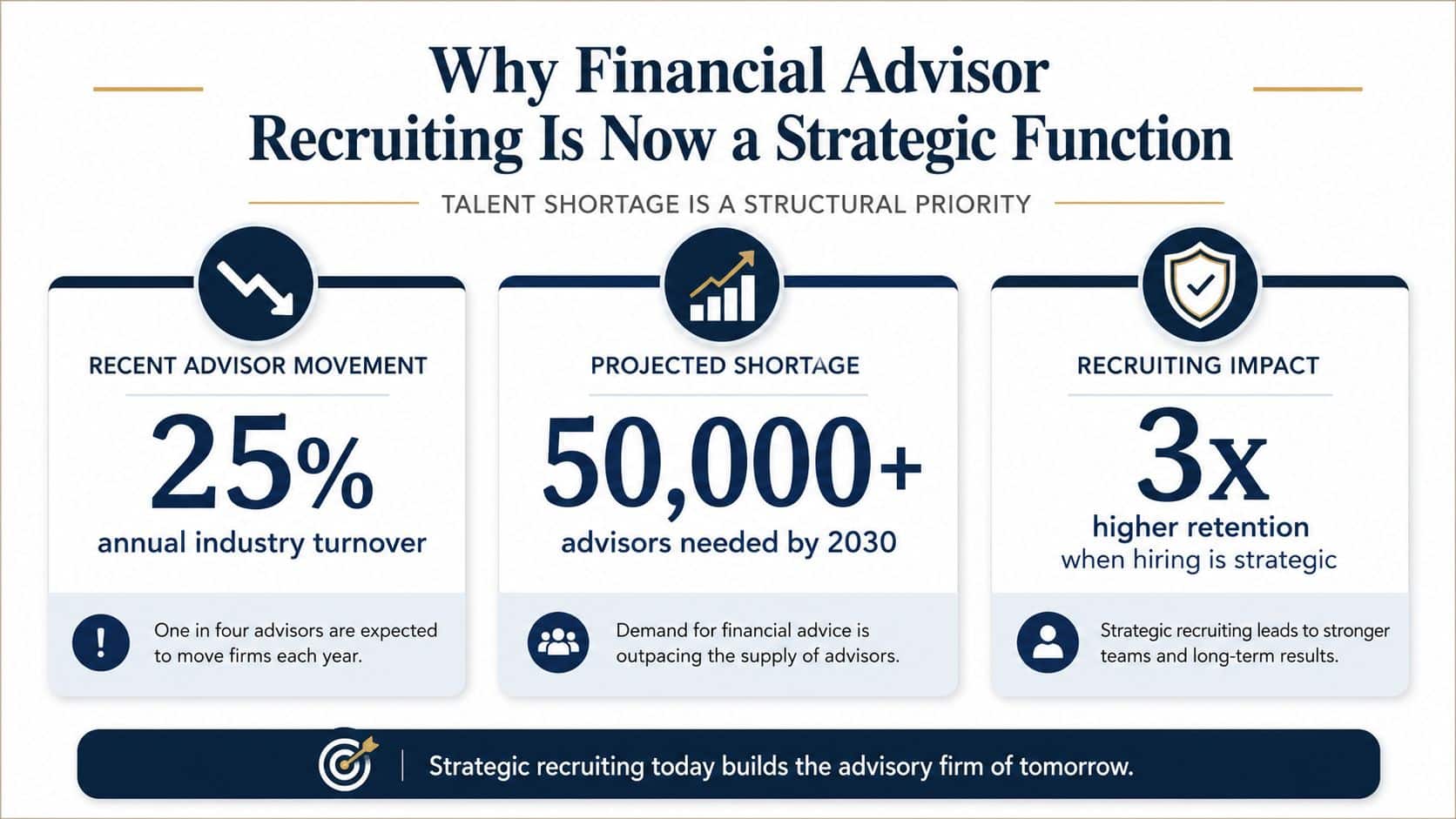
The talent gap is no longer theoretical. McKinsey estimates U.S. wealth-management firms will need 30,000 to 80,000 net new advisors over the next 10 years, compared with only 8,000 added over the previous decade, and the U.S. Bureau of Labor Statistics projects personal financial advisor employment will grow 10% from 2024 to 2034, much faster than average. That combination of replacement demand, retirement pressure, and business growth has changed recruiting from an HR task into a balance-sheet issue.
For owner-operators, that means the question is not whether to recruit. It is whether the firm has a repeatable system for finding advisors who can stay, transition, and produce. A one-off hire may fill a desk. A recruiting system fills the next three years of capacity.
A useful way to start is by writing a candidate profile that matches the firm's actual risk appetite. The profile should cover licensing status, book size, production history, product mix, client demographics, and regulatory history. It should also state whether the firm is open to a career changer, lateral move, breakaway, or bank-to-RIA transition, because each path brings different supervision and disclosure questions.
Practical rule: If the firm cannot explain who it wants in one page, the screening team will end up saying yes to people the operations team cannot support.
That profile also needs a decision on what is trainable and what is not. Culture fit, coaching style, and software fluency can be developed. A history of weak disclosure, chronic client complaints, or an unwillingness to operate within the firm's compliance framework is a different matter. Those are usually deal-breakers.
The recruiting posture has to match the firm's growth model too. A high-touch RIA with complex planning work may value a narrower candidate pool and deeper vetting. A bank channel leader may need a faster screen for cross-sell discipline, referral fluency, and supervision readiness. The point is to align sourcing, interviews, and onboarding with the kind of advisor the firm can absorb.
For firms building that playbook, a practical financial services hiring guide can help frame the broader workflow, but the key discipline remains internal. The best recruiting teams write the profile before they write the offer.
Sourcing Channels That Actually Produce Advisors
Most firms still overestimate the value of broad posting and underestimate the value of targeted relationships. In Charles Schwab's 2024 RIA Benchmarking Study, 55% of firms said they use personal and professional networks for recruiting, ahead of colleges and universities at 36%, RIAs at 32%, and non-financial professional services firms at 20%. That split says something important, advisor recruiting is still relationship-led.
A compliant channel mix usually starts with who already knows the firm's standards. Centers of influence, former colleagues, custodial relationships, and referral sources often produce better conversations than public job boards because they reduce the mismatch between candidate expectations and firm reality. They also tend to surface people who understand client service, not just compensation.
Channel choice should match the candidate persona
A breakaway advisor often needs a discreet, direct outreach motion and a clear transition story. A younger planner may respond better to campus partnerships, internships, and internal mobility. A more established lateral advisor usually wants a credible network introduction and a strong operational explanation before a formal interview ever happens.
The compliance hooks vary by channel, and firms should account for them before outreach starts. LinkedIn messages can drift into solicitation issues if language becomes too promotional or misleading. Conferences can create gift-and-entertainment questions. Referral arrangements need clear disclosure and documented terms.
| Channel | % of RIA Firms Using | Typical Candidate Quality | Compliance Hook |
|---|---|---|---|
| Personal and professional networks | 55% | Often high, especially for trusted referrals | Document referral terms and avoid undisclosed compensation |
| Colleges and universities | 36% | Strong for early-career pipeline | Campus recruiting and internship supervision |
| RIAs | 32% | Often strong for lateral moves | Transition disclosure and recordkeeping |
| Non-financial professional services firms | 20% | Mixed, but useful for adjacent skill sets | Vet outside-industry backgrounds carefully |
For firms managing outreach volume, it can help to use a structured workflow that keeps prospects, notes, and follow-up in one place. A practical way to think about the system is the same way a practice evaluates top hiring platforms to compare, not by bells and whistles, but by whether the process stays organized and defensible.
Good sourcing is not about reaching everyone. It is about reaching the few channels where the right advisors already are.
One internal question should sit alongside every sourcing discussion, especially for relationship-driven firms. How do the firm's centers of influence fit into the broader recruiting motion? The answer belongs in the recruiting plan, not as an afterthought, and the centers of influence framework should be treated as part of the business development stack, not a side project.
Running Interviews That Pass Compliance Review
A defensible interview process starts with consistency. Resume review, phone screen, panel interview, reference checks, and final approval should all use the same scoring rubric, because the firm needs to show that hiring decisions were based on business criteria, not improvisation. That consistency also helps reduce discrimination risk, which is why the best firms document both what was asked and why it mattered.
The interview sequence should be staged, not improvised
The first screen should test fit against the role profile. Does the candidate's licensing status line up with the firm's supervision model. Does the book size fit the practice's service capacity. Does the product mix create a natural opening or an immediate mismatch.
Later rounds should move into behavior and scenario handling. Good questions probe how the candidate handles client objections, transition pressure, team communication, and disclosure discipline. Bad questions drift into protected categories, personal circumstances, or vague personality judgments that can't be defended later.
A clean scorecard usually includes four areas:
- Role fit: Experience, license readiness, and book alignment.
- Client handling: Communication style, planning depth, and service consistency.
- Compliance mindset: Disclosure habits, recordkeeping, and supervision acceptance.
- Transition readiness: Ability to move accounts, communicate clearly, and follow firm process.
Reference checks should not be casual back-channel conversations. They need a standard script, notes, and a reason for each question. The most useful references often reveal whether the candidate follows process under pressure or only sounds polished in an interview.
The goal is not to collect perfect answers. The goal is to make sure the same questions are asked the same way every time.
The most common failure point is silent inconsistency. One manager wants production; another wants “culture fit”; a third wants a fast yes. That creates a record the firm can't explain if a candidate later disputes the decision or a regulator reviews the file.
A simple rule helps. Every candidate should be measured against the same written profile, scored with the same tool, and reviewed by the same decision group. That keeps the process tight without making it rigid.

Compensation Structures and Transition Packages
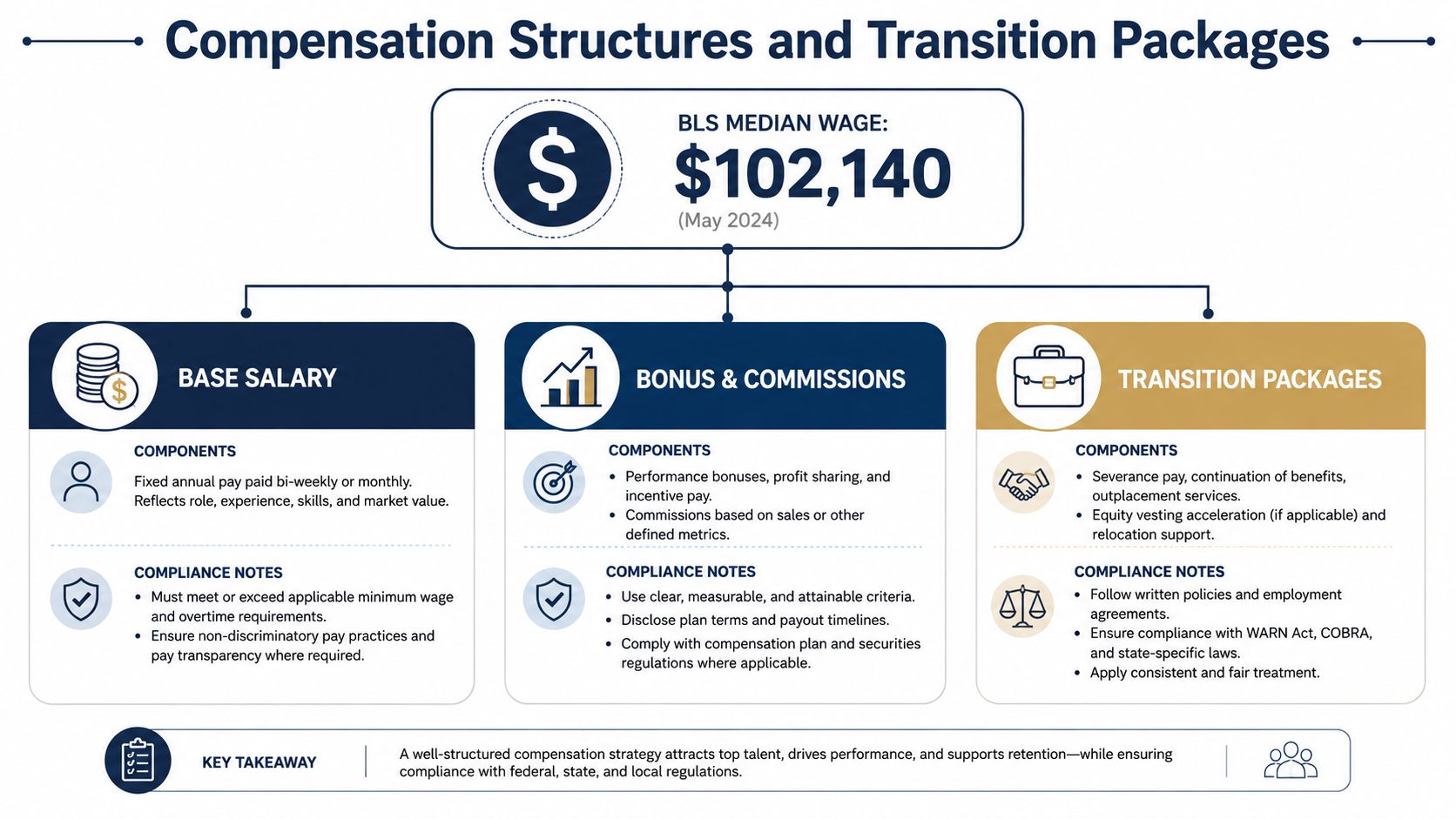
Compensation often decides whether a recruiting campaign wins the deal or loses it. The market anchor is the median annual wage of $102,140 for personal financial advisors in May 2024, according to the U.S. Bureau of Labor Statistics. That figure does not tell a firm what to offer, but it gives leadership a defensible starting point when a candidate asks how the proposal compares with the broader market.
Offers need structure, not just size
A strong offer usually combines a base element, production-sensitive upside, and support for transition costs. The mix depends on the candidate's stage. A newer advisor may care more about stability and training. A lateral producer may care more about payout clarity, client migration support, and the freedom to preserve existing relationships.
Transition packages become sensitive when they involve promissory notes or forgivable loans. Those documents need careful drafting because they affect retention, repayment, and how the relationship is viewed if the advisor leaves early. Former employers and regulators can review those terms, so the paper needs to match the behavior the firm expects.
The core underwriting question is straightforward. If the hire walks away before the end of the term, can the firm explain the repayment terms, the vesting logic, and the disclosure trail without embarrassment? If the answer is no, the package was too loose.
A good package also avoids promising what the firm cannot supervise. If transition assistance includes account transfer support, marketing help, or administrative aid, the scope should be written clearly enough that no one mistakes it for an unrestricted guarantee. Recruiting and compliance interlock here, because the offer letter becomes part of the supervisory file and needs to hold up during SEC review and internal file review alike.
The sections of the package should line up with the candidate's real pain points:
- Base salary or draw: Provides stability during the move.
- Bonus or commissions: Rewards production and client retention.
- Transition support: Helps cover moving costs, technology changes, and account transfer friction.
- Repayment terms: Protects the firm if the advisor exits before the commitment period ends.
A package that is generous but vague creates friction later. A package that is precise, documented, and aligned with the role tends to survive scrutiny better.
Onboarding and Early Retention Playbook
The first ninety days decide whether recruiting became a growth investment or an expensive detour. One industry source reports roughly a 10-15% retention rate for financial advisors, agents, and brokers, which means many hires do not last over time. That makes onboarding a recruiting issue that deserves the same strategic attention as sourcing and interviewing.
A weak start usually shows up fast. The advisor is signed, but the firm has not cleared the path for licensing transfers, registration cleanup, system access, supervision setup, or compliance training. The result is predictable. The new hire spends the first stretch improvising instead of building momentum.
A clear 30/60/90 cadence keeps the move from unraveling
First 30 days: licensing transfers, registration cleanup, system access, supervision setup, and compliance training should be finished early enough that the advisor can work without improvising. If the firm waits too long on access or approvals, the new hire spends the first month looking busy instead of building momentum. That is also the point where compliance and recruiting need to operate as one workflow, because sloppy setup can create avoidable U-5 disclosure issues, promissory note problems, or pressure around improper solicitation during the transition.
By day 60: the advisor should be inside the core systems, using the CRM, and learning the firm's client service rhythm. That includes understanding which notes must be documented, how meeting follow-ups are tracked, and who signs off on what. The client relationship management workflow matters here because weak CRM adoption usually turns into weak retention.
By day 90: the advisor should be working a real transition plan, reviewing client cases, and showing early production movement. If client introductions are still being delayed at that point, the firm usually has a manager problem, not a candidate problem. In practice, that means the transition sponsor is not coordinating cleanly with supervision, operations, or the recruiting lead.
Three manager behaviors kill retention:
- Vague expectations: The advisor never learns what success looks like week by week.
- Missing tools: The new hire spends time asking for access instead of serving clients.
- Slow introductions: The firm keeps the advisor isolated from colleagues and referral partners.
Strong onboarding is visible. The advisor knows who approves what, where to find the right data, and how the first production milestone will be measured.
Retention also depends on the paper trail. The onboarding record should show what training was completed, what permissions were granted, and which supervisor owned each step. That matters more when the firm is managing several moves at once, because the file has to make sense if questions come up later in SEC review or an internal audit. Treat the onboarding file as part checklist, part supervision log, with enough detail to explain how the advisor was brought into the practice without gaps.
Trust can break down quickly if recruiting language gets ahead of reality. A manager who oversells support during the hiring process and then disappears after the start date creates a gap the advisor will notice immediately. Once that happens, even a solid payout structure has to carry more weight than it should. The fix is straightforward, keep the transition promises narrow, document them clearly, and make sure the people handling supervision know exactly what was promised during recruiting.
Retention, KPIs, and the Diversity Pipeline Question
Retention starts with measurement. If a recruiting class is not helping the firm, the problem shows up in the numbers before it shows up in complaints. Track 12-month persistence, production ramp, client retention, and net new assets from the first day so leadership can tell whether the hire is adding capacity or creating churn.
Pipeline health rarely stays hidden for long.
A candidate process can look polished and still fail in practice. Strong interviews with weak early production usually point back to the screening filter. Smooth onboarding with poor persistence usually points to role fit, compensation promises, or the way the manager handled the transition. Those are not abstract issues, and they are easier to correct when the firm is watching the right signals instead of relying on instincts.
The diversity question belongs in the same operating review. New York Life's diversity research recommends broadening candidate pools, using campus partnerships and internal job boards, tracking results, and improving compensation transparency. Those are process choices, not slogans, and they only matter if the firm can see where candidates enter, where they stall, and where they leave.
The recruiting and compliance work also have to line up. Broader sourcing changes who enters the funnel, but SEC review muscle still has to check what was promised, what was documented, and whether advancement criteria were applied fairly. If compensation talk gets ahead of what supervision can support, or if transitions create pressure around U-4, U-5, disclosure review, client communication, or any promissory note tied to the move, the firm has built risk into the pipeline itself. Recruiting and compliance should not run on separate tracks.
A simple scorecard usually surfaces the pattern fast:
- Source mix: Which channels produce viable interviews.
- Stage conversion: Where candidates stall in the funnel.
- Early persistence: Who stays through the ramp period.
- Representation tracking: Whether the pool widens or narrows over time.
The mistake is treating diversity as a branding exercise while leaving the workflow unchanged. Firms that improve the bench usually do the unglamorous work, they widen sourcing, clarify compensation earlier, and apply the same advancement standards every time. That is also where the blog from Hire Sense is useful as background reading, because the advantage comes from managing recruiting and compliance as one process, not two separate checklists.
Advisor Recruiting FAQs for RIAs, Wealth Firms, and Banks
The timing question comes up first because compensation cycles affect movement. One industry summary claims 90% of advisor moves happen in the last or first quarter, with Q1 the busiest period because it follows annual bonuses, so outreach and offer timing should be planned around those windows rather than treated as year-round noise. That is especially useful for firms that lose deals because they start too late.
The diversity question follows close behind. The practical answer is not to market a slogan, but to broaden sourcing, use campus and internal channels, and make compensation expectations clearer sooner in the process. That's the pattern that turns a vague aspiration into a recruiting workflow.
Transition questions are usually the most sensitive for bank and broker-dealer moves. Any shift from one supervisory framework to another should be documented with extra care around U-4, U-5, disclosure review, client communication, and any promissory note attached to the move. If the paperwork trails the conversation, the firm is already behind.
For leaders who want a fuller checklist, a blog from Hire Sense is useful as background reading on the broad recruiting process, but the advantage comes from treating recruiting and compliance as one operating system. That is where most firms either protect the move or create their own risk.
The best question for any recruiting meeting is not “Can this person sell?” It is “Can this person be hired, transitioned, and retained without creating avoidable compliance risk?”
Advisor Momentum works with RIAs, wealth firms, and bank teams on recruitment support, compliance-ready marketing, and the workflow pieces that sit between attraction and onboarding. Firms that want a recruiting process built for regulated financial services can visit Advisor Momentum to explore how that support fits advisor growth, transition planning, and retention.
