
A financial advisor can have the right credentials, a polished homepage, and a clean service page, yet still lose qualified prospects at the moment they're deciding whether to reach out. That gap usually isn't about skill, it's about trust signals. A testimonial page on website gives prospects something concrete to validate what the firm says about itself, which matters even more when the audience is cautious, comparison-shopping, and looking for proof that other real people were comfortable moving forward.
Table of Contents
- Why a Testimonial Page Is a Non-Negotiable Asset
- Core Components of a Compliant Testimonial Page
- Sourcing and Formatting Testimonials Legally
- Designing Your Testimonial Page for Credibility
- Optimizing Your Page for SEO and Discovery
- Measuring Performance and a Compliance Workflow
Why a Testimonial Page Is a Non-Negotiable Asset
A prospect can review an advisor's biography, services, and disclosures, then still hesitate because none of that answers the core question, “Does anyone like me trust this firm?” That hesitation is common in finance, where the perceived downside of a bad decision feels high and the buyer wants social proof before they submit a form or book a call.
The business case is straightforward. Testimonials on a landing page can increase conversions by up to 34%, and a benchmark study found that a generic logo strip adds 8% conversion lift on average, while a single text testimonial adds 14% source. In practical terms, a testimonial page is not decoration, it's a conversion asset that helps reduce uncertainty at the exact point where a prospect is deciding whether to act.
Why trust matters more in advisory marketing
Financial advice is a high-trust purchase. Prospects usually can't evaluate quality from a quick demo or product trial, so they look for signals that the firm is credible, stable, and transparent.
That's why a testimonial page works best when it's tied to a real decision path. The prospect sees it after visiting a homepage, a service page, or a contact page, then uses it to answer a simple question, whether the firm has already helped someone in a similar situation. A page that does that well can support lead generation without sounding like sales copy.
Practical rule: if a testimonial does not make a cautious prospect feel safer, it's taking up space without pulling its weight.
For regulated advisors, the issue is not whether social proof belongs on the site. The issue is whether it's presented in a way that builds trust without creating misleading expectations. That's where compliance guardrails matter, because the best testimonial pages are both persuasive and disciplined.
The SEC rule changes the marketing job, not the business goal
The SEC's Testimonial Rule doesn't remove the value of testimonials, it changes how they have to be sourced, approved, and displayed. A compliant advisor can still benefit from social proof, but the page has to be built around authenticity, disclosure, and review discipline.
That shift is useful. It pushes the page away from generic praise and toward verifiable proof, which is exactly what skeptical prospects want from a financial professional. A well-run testimonial page tells a cleaner story than broad brand claims ever can.
Core Components of a Compliant Testimonial Page
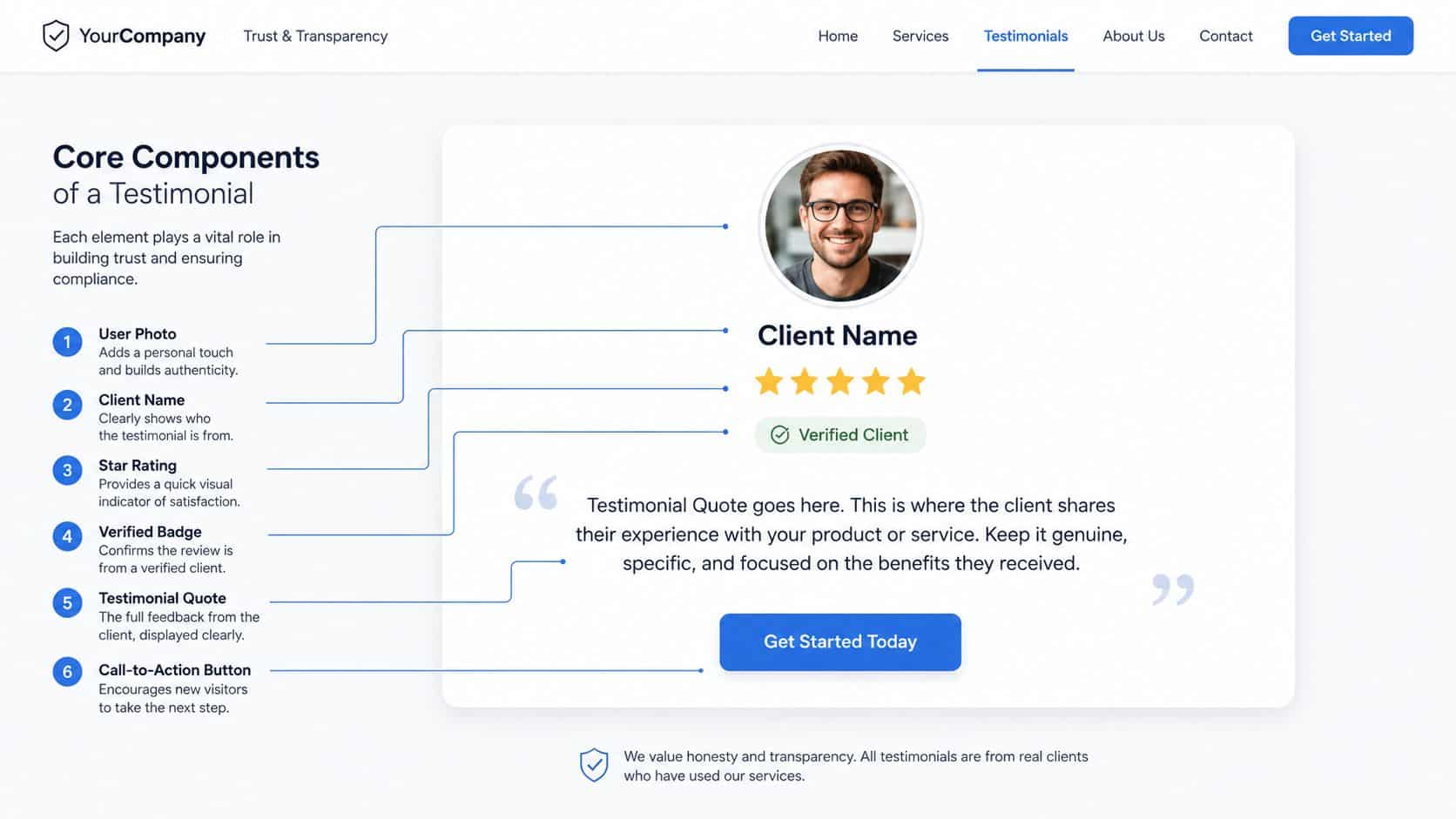
A strong testimonial page should function as a structured social-proof system, not a quote dump. Prospects need to scan it quickly, see who is speaking, and connect the praise to a real advisory relationship.
Build each testimonial around identity and context
The most credible testimonials include reviewer identifiers such as the person's name, title, company, and photo where permissible. For advisors, context matters just as much. A prospect wants to know whether the person was an accumulation client, retiree, business owner, or another relevant profile, because that detail makes the praise easier to trust.
Length is not the main issue. Shorter quotes often work better because they are easier to scan, especially when a visitor is moving through a crowded site. Specificity is what carries weight. A vague compliment about “great service” feels thin. A testimonial that describes a real use case, a real interaction, or a real outcome reads as more believable.
Mix formats so different visitors can evaluate trust in different ways
A testimonial page should not rely on only one format. A mix of text, video, and ratings gives different visitors a way to assess credibility in the style they prefer Webflow guidance. Some readers want a quick quote, others want to hear tone and manner from a video, and some want a simple visual cue that the experience was positive.
The structure matters because trust is rarely built by a single artifact. A page that combines concise testimonials with reviewer identifiers and different media types creates more paths to confidence. That is a stronger design choice than a long wall of praise, especially for advisors who need to avoid looking careless or exaggerated.
Good practice: if the testimonial cannot survive close reading, it should not be featured prominently.
The page works best when each piece has a clear job. The testimonial content provides the proof, the identifiers provide the verification, and the layout provides the readability. If any one of those pieces is weak, the entire page feels less credible.
Sourcing and Formatting Testimonials Legally
The best testimonial workflow starts before any quote is collected. For a financial advisor, the sourcing process has to respect consent, avoid pressure, and keep the final wording faithful to what the client said.
Ask in a way that invites detail without steering the answer
A compliant request should encourage the client to describe the experience in their own words. That means asking open-ended questions about what problem they came in with, what felt helpful, and what changed in the relationship. It does not mean supplying the answer for them.
The best requests are specific enough to be useful and neutral enough to avoid leading language. If the question nudges the client toward a promised outcome, the resulting testimonial can become risky. The safer path is to ask for honest feedback about the process, communication, and experience.
Document consent before anything goes live
Every testimonial should be tied to clear permission to use the content on the website and, where relevant, in other marketing channels. For regulated firms, that documentation needs to be easy to retrieve later, because the approval trail matters as much as the quote itself.
This is also where internal process helps. A simple intake form, written approval, and stored records can prevent a lot of downstream problems. For firms that already rely on strict review processes, pairing testimonial collection with email compliance software can help keep approvals and records from slipping through the cracks, especially when the request started in email and the final asset lives on the site Mail Merge for Gmail.
Edit for clarity, not for meaning
A testimonial can be trimmed for length or readability, but it shouldn't be reshaped into something the client didn't say. That distinction matters. Cleaning up filler words is one thing, changing the substance is another.
The safest edit is the one that preserves the client's intent and tone.
A practical workflow looks like this:
- Collect the raw response: save the original wording before any cleanup.
- Check for permission: confirm the client agreed to publication and understand where it will appear.
- Trim only for readability: remove repetition or irrelevant detail without altering meaning.
- Review for claims: make sure the quote doesn't imply performance, return, or outcome language that needs extra scrutiny.
- Archive the record: keep the original, the edited version, and the approval together.
That process protects both credibility and compliance. It also makes later audits much easier because the firm can show exactly how the testimonial moved from intake to publication.
Designing Your Testimonial Page for Credibility
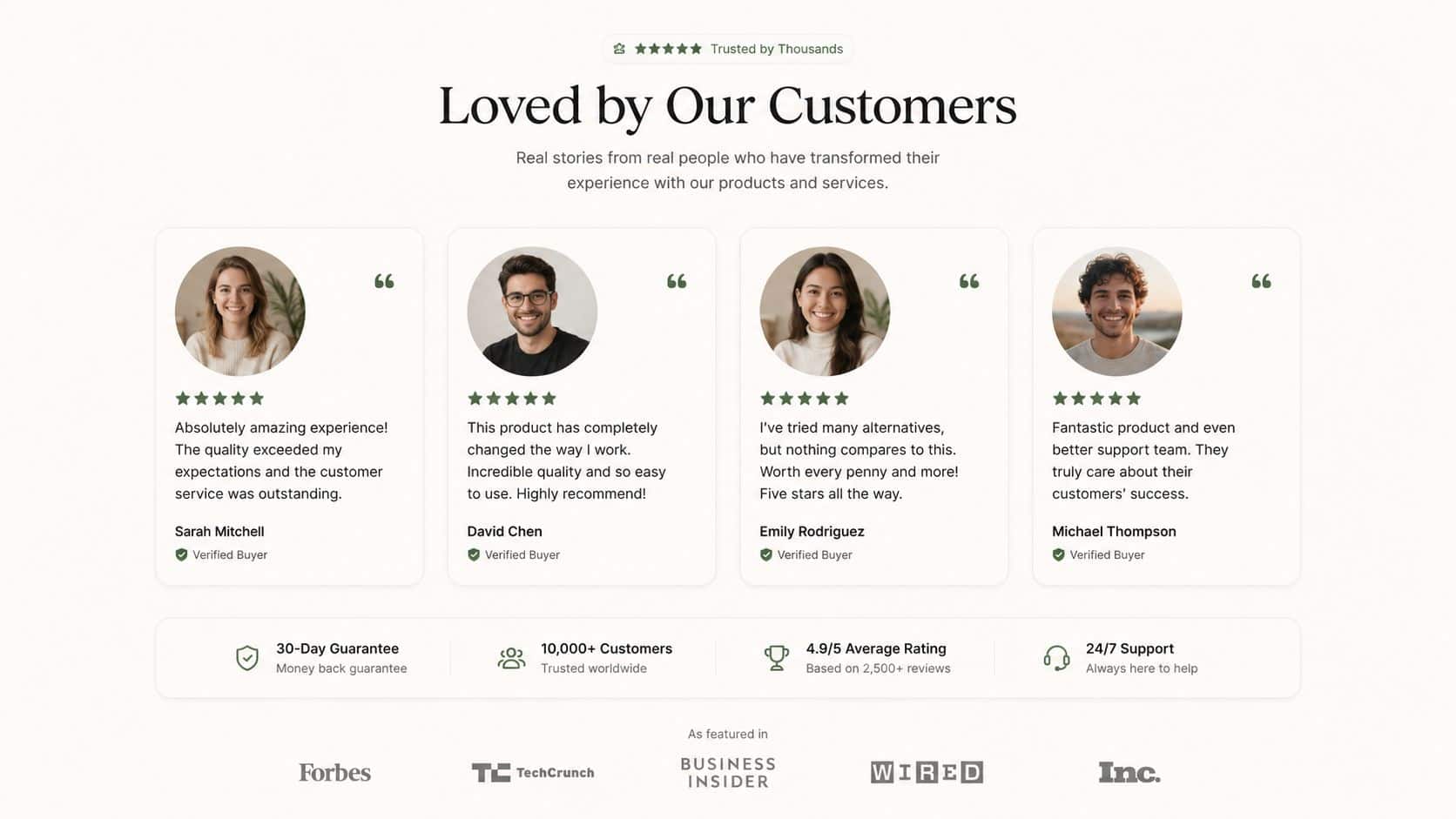
A testimonial loses force when the design buries it. The page has to do more than display content, it has to make the content easy to verify, easy to read, and hard to dismiss for a prospect who is already checking whether the firm feels credible.
Put the strongest proof where uncertainty is highest
Guidance on testimonial placement points to homepages, product pages, and other high-traffic areas because people see proof earlier in the decision process Wix guidance. For a regulated advisory site, that usually means the homepage hero area, a services page, a planning page, and the contact or booking path. A dedicated page still matters, but it should work as part of a broader trust structure instead of sitting apart from the main user journey.
That site-wide presence matters because a dedicated page can be missed if nothing points to it. A prospect may never look for testimonials unless another page leads them there. A testimonial page works better when it supports the site's trust architecture and gives visitors a clear place to confirm what they have already seen elsewhere.
Use real identifiers and visual cues without overdoing it
Authenticity rises when testimonials show real names, photos, and specific details instead of generic praise Wix guidance. That matters in financial services because vague praise can feel staged, and readers are more alert to polished but empty language. If the firm uses approved client identities, the display should reinforce that the quote came from a real relationship and not from a marketing rewrite.
The design should support that authenticity without crowding the page. Clean spacing, readable typography, and a clear hierarchy make each review easier to absorb. If a logo or photo is used, it should reinforce identity rather than turn the page into a cluttered gallery.
A strong advisory layout usually balances three things:
- Visibility: the page is easy to find from main navigation or key site paths.
- Credibility: each testimonial is tied to a real person or approved entity where allowed.
- Clarity: disclosures are visible but not intrusive, so compliance does not overwhelm the page.
A page can also support the broader site by connecting to a well-planned design system. A firm that already invests in consistent presentation can extend that trust into testimonial design, much like the approach discussed in this financial advisor web design resource.
Keep disclosures visible but calm
Compliance text should not look hidden, and it should not dominate the page either. The goal is to place required language in a predictable spot so a prospect can find it without losing the flow of the page. That makes the testimonial feel transparent without turning the layout into a warning label.
The same principle applies to navigation. If the page feels easy to move through, it feels more trustworthy. If disclosures are chaotic, a visitor can start wondering what else is being obscured. Firms that collect testimonials through email and store approvals carefully can also keep those records organized with email compliance software, which helps the publication process stay aligned with review and archiving requirements.
Optimizing Your Page for SEO and Discovery
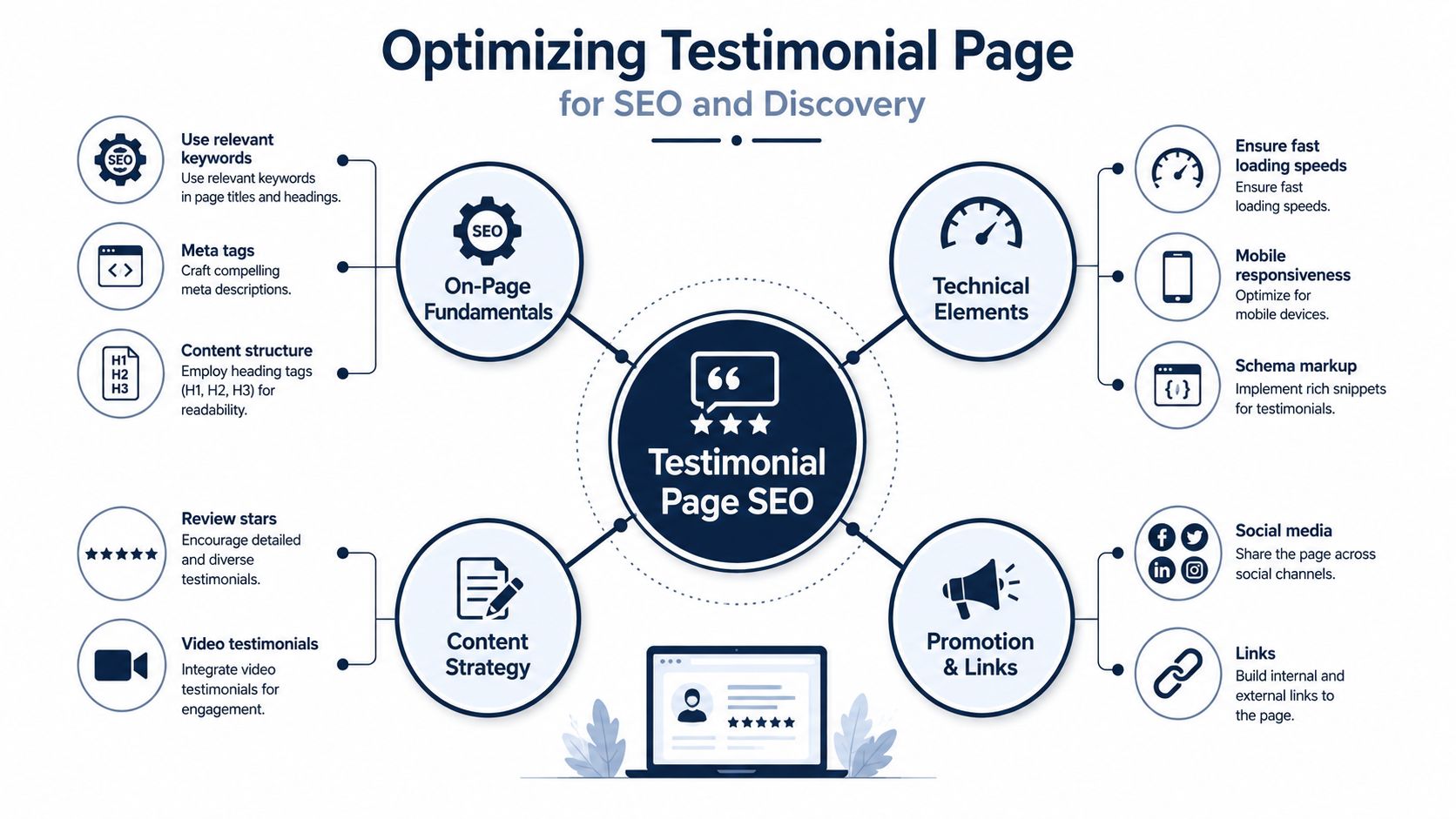
A testimonial page has a dual job. It has to help search engines understand the page, and it has to help high-intent visitors validate the firm once they arrive.
Optimize for branded discovery first
SEO guidance frames testimonial pages as a place that can rank for branded searches such as “your firm reviews,” which makes sense because those visitors are already looking for reputation signals Moz guidance. That's why the page should stay tightly aligned with credibility, identity, and proof.
A testimonial page is not usually the right place for broad educational targeting. Its strongest search value comes from helping people who already know the firm and want reassurance before contacting it. That makes the page more of a branded trust destination than a generic content page.
Use structure that search engines and humans can read
The page should have clear headings, readable copy, and obvious identifiers so both users and crawlers can interpret it. If the firm uses structured data, the markup needs to be tested carefully before publication, since broken or mismatched markup can create confusion instead of clarity.
A useful reference point for QA is to validate structured data effectively before the page goes live. That kind of check is especially important for regulated firms, where the content must stay accurate and the markup must match what visitors see.
Internal links should guide discovery from trust-sensitive pages
A testimonial page shouldn't depend only on navigation. It should also be linked from service pages, contact pages, and other high-intent content so a visitor can move from interest to validation without hunting.
That's where content strategy and SEO overlap. A strong internal-link path makes the page easier to discover and signals that the testimonials are part of the firm's broader trust story. The same logic applies to a content program that supports advisor visibility across the site, including this financial advisor content marketing framework.
SEO insight: for advisors, testimonial pages often perform best when they support branded trust searches rather than chase broad non-brand keywords.
The result is a page that serves two audiences at once. Search engines can understand it, and visitors can use it as a final checkpoint before they contact the firm.
Measuring Performance and a Compliance Workflow
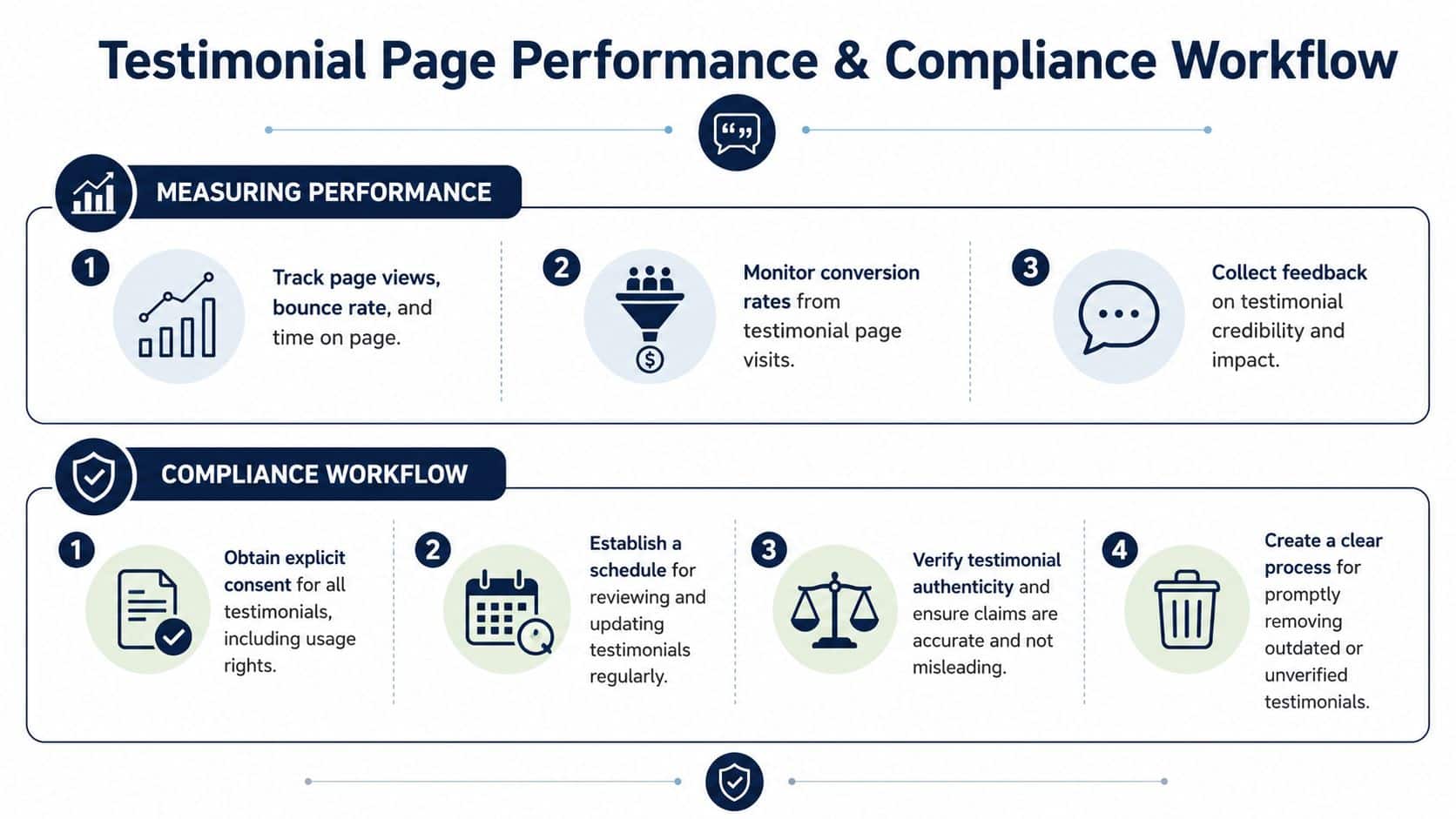
A testimonial page is only useful if it keeps earning its place. That means measuring behavior, reviewing compliance, and updating the page on a repeatable schedule.
Track the signals that matter
Performance should be judged by what the page does, not by how full it looks. The most useful signals are whether visitors stay long enough to read, whether they move onward to a contact point, and whether the page helps support conversions from other pages.
A/B testing can help, but the test should focus on meaningful choices. For example, a firm can compare a quote-heavy layout against a shorter, more visual one, or test whether testimonials placed near a call to action outperform testimonials buried lower on the page. The point is to learn which presentation builds trust with the right audience.
Keep compliance approval predictable
A practical compliance workflow needs the same discipline every time:
- Intake the testimonial. Save the exact original wording and the source of the submission.
- Check eligibility and consent. Confirm the client has approved use and understands the intended placement.
- Review the wording. Remove misleading language, unsupported claims, and any phrasing that could imply guaranteed outcomes.
- Verify the identifiers. Make sure names, titles, photos, or company references match what the client approved.
- Log the final version. Store the published copy, the approval record, and any disclosures in one place.
- Schedule periodic review. Revisit the page to confirm the content is still current and still compliant.
Compliance rule: no testimonial should go live until the firm can explain who said it, what they approved, and where the final version is stored.
Audit the page before publication and after updates
A clean audit checklist keeps the page from drifting over time:
- Consent: permission is documented and easy to retrieve.
- Accuracy: the wording matches the approved meaning.
- Disclosure: required language is visible and current.
- Identity: names, titles, and photos are consistent with the approval record.
- Context: the testimonial doesn't imply a promise the firm can't support.
- Placement: the page and its links are easy to find across the site.
- Freshness: outdated or unverified testimonials are removed promptly.
That workflow protects the firm from avoidable risk while keeping the page useful as a marketing asset. It also gives compliance officers a process they can audit instead of a one-off collection of quotes.
If an advisor's current site has strong services but weak proof, the next move is to build a testimonial page that's compliant from day one and useful across the funnel. Advisor Momentum can help financial firms turn social proof into a trust asset without sacrificing regulatory discipline, so the smartest next step is to review the current website, identify the highest-risk gaps, and build a testimonial framework that's ready for both prospects and compliance review.
